Pride Month Means Carrying the Names: Reflections of an LGBTQ+ Long-Term HIV Survivor
by Dr. H. Alexander Satorie-Robinson
Every June, LGBTQ+ Pride Month arrives wrapped in celebration.
There are rainbow flags on buildings, corporate logos change colors, music spills into the streets, and people celebrate visibility in ways my generation could barely imagine when we were young. I celebrate those moments too. I understand what they represent.
But Pride has always felt more complicated to me.
For me, Pride arrives carrying names.
I am a long-term HIV survivor.
That statement means something different depending on who hears it. For some people, it sounds clinical. For others, political. For me, it means I have lived long enough to watch entire communities disappear and long enough to experience the strange reality of becoming older in a generation that was not always expected to age.
When I think about LGBTQ+ Pride, I do not first think about parades.
I think about funerals.
I think about memorial services.
I think about hospital rooms.
I think about answering late-night phone calls and learning, again, that another friend was gone.
And I think about how community grief did not end with AIDS.
The forms of loss changed.
The threats changed.
But grief remained.
Today, LGBTQ+ communities continue carrying new layers of collective grief. Transgender Marylanders and transgender people across the country continue facing violence, hostility, and disproportionately high rates of fatal hate crimes. Too often, vigils have replaced celebrations. Too often, names continue being added to lists that should never exist. For many of us who have already lived through decades of community loss, each new act of violence against transgender people does not exist separately from earlier grief—it adds to it.
People often ask how individuals survive repeated loss. The truth is that after a while survival stops feeling like a single event and becomes a way of living. You adapt. You compartmentalize. You continue because there are few alternatives.
For years, one of my primary coping strategies was attendance.
I attended funerals because there were always more funerals.
I attended memorial services because remembrance felt like responsibility.
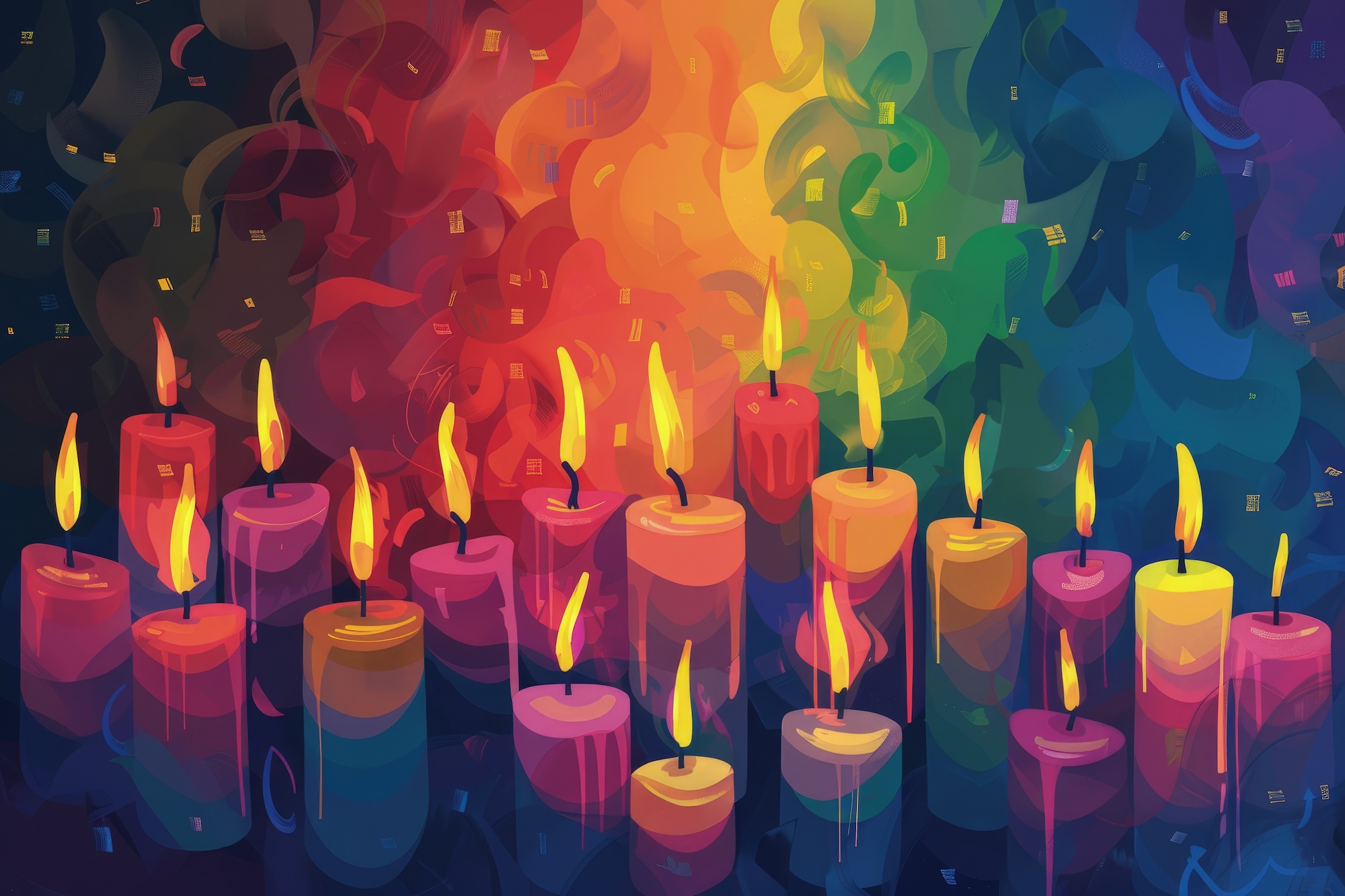
I attended candlelight vigils because grief demanded witnesses.
Showing up became the thing I could control when so much else felt uncontrollable.
Over time, grief became ritual.
Ritual became coping.
And coping became survival.
The difficult thing about multiple losses is that grief changes shape.
Early grief feels immediate and sharp. Later grief becomes cumulative.
One loss sits beside another until memories begin overlapping. You stop measuring years by milestones and begin measuring them by who died that year. Certain songs become impossible to hear casually. Entire neighborhoods become memorials. Birthdays and anniversaries accumulate.
At some point, I realized I was no longer grieving only individuals.
I was grieving communities.
I was grieving chosen family.
I was grieving networks of people who had shaped who I was becoming.
I was grieving futures we thought we would have.
I still remember attending the first display of the AIDS Memorial Quilt on the National Mall in Washington, D.C., on October 11, 1987.
More than 1,900 panels stretched across the Mall during the National March on Washington for Lesbian and Gay Rights. For many people, it was the first time they saw the scale of loss made visible. Fabric became testimony. Quilting became activism. Public space became sacred space.
I remember walking among those panels slowly.
Reading names.
Touching fabric.
Stopping.
Starting again.
More than fifty of those panels represented close friends and colleagues.
Over fifty.
Not people I vaguely knew.
People I worked beside.
People I laughed with.
People whose apartments I visited.
People whose calls I returned.
People whose deaths changed the architecture of my life.
And the hardest part of surviving HIV has been understanding that the list did not stop there.
The names kept coming.
That reality changes a person.
People often imagine grief as something you move through and eventually leave behind. My experience has been different.
Grief travels with you.
It changes how you love because you understand how fragile connection can be.
It changes how you attach because you know people can disappear.
It changes how you celebrate because joy and loss rarely remain separated for long.
Sometimes coping looked like activism because doing something felt better than helplessness.
Sometimes coping looked like work because staying busy created temporary distance from grief.
Sometimes coping looked like humor because laughter was one of the few things HIV, stigma, and death could not completely take away.
Sometimes coping meant building chosen family because traditional systems failed many of us.
Sometimes it meant therapy, memorial rituals, community gatherings, support groups, or simply allowing myself to admit that decades later, certain losses still hurt.
People often speak about HIV in the past tense now.
I understand why.
The epidemic changed.
Treatment changed.
Science changed.
Deaths in the United States declined dramatically from the years when entire friend groups disappeared within months.
But HIV is not over.
Maryland continues to report hundreds of new HIV diagnoses each year, and communities already burdened by racial, economic, and healthcare inequities continue carrying disproportionate impact. In Baltimore especially, HIV remains intertwined with poverty, housing instability, behavioral health challenges, stigma, and structural inequities.
The crisis evolved.
It did not disappear.
What people rarely discuss about long-term survivorship is that survival itself creates grief.
You grieve people.
You grieve time.
You grieve interrupted futures.
You grieve the years spent expecting not to have old age and then suddenly finding yourself living it.
You grieve the person you might have become under different circumstances.
But there is another truth too.
I survived HIV.
I survived extraordinary loss.
I survived systems that too often abandoned people who needed care.
I survived long enough to watch younger LGBTQ+ generations inherit rights, language, visibility, and possibilities that many before them fought for but never experienced.
And because of that, Pride Month still matters deeply to me.
Not because it asks me to forget grief.
Because it gives me space to carry it openly.
So when I celebrate LGBTQ+ Pride Month, I celebrate joy.
I celebrate resistance.
I celebrate survival.
But I also remember.
I carry stories.
I carry memories.
I carry responsibility.
Most importantly, I carry names.
And for some of us who survived HIV, surviving means learning how to carry those names while continuing to live anyway.
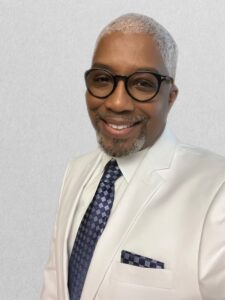
H. Alexander Satorie-Robinson, Ed.D., MBA
External Affairs Director
Roberta’s House